Add MobilityArena as a preferred source on Google
The smartphone industry has matured, so the initial emphasis on hardware as a significant differentiator on devices to entice users, and being a major income source for suppliers, is constrained. Besides, as the general smartphone user base increases and becomes more informed, expectations exceed hardware dependent features; user experience increases in relevance. Alongside, to an extent, actual and prospective smartphone users are unpredictable from asserting their agency – suggesting that the validity of initial expectations are diminishing and rather becoming misapprehensions.
One common example is the assumption of Android being attractive solely to techie types. However, from my experience in the field, and I’m privy to a significant amount of old ladies and self-described technophobes who couldn’t care less about smartphones, yet own Galaxy phones or others from a number array running a variant of Google’s open source OS. What’s more interesting, is that come upgrade time, eventually, they’ll want another one, typically because they’ve had one prior and are more familiar with the user interface.
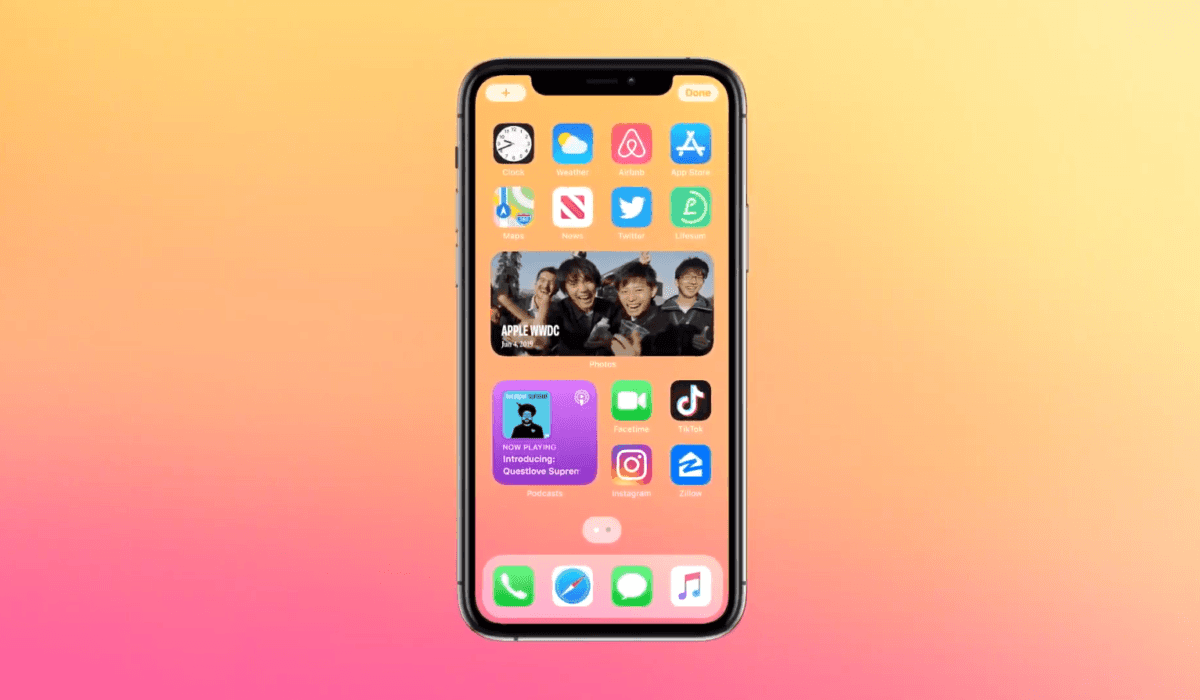
Why do people like iOS so much?
On another hand, besides user-focused considerations; additionally, the shift towards a service orientation, opposed to the initial product focus of the consumer tech landscape generally, contributes to increasing attention towards value propositions on smartphones through the software route.
Since software differentiation is becoming increasingly relevant, this article briefly explores the idea from the vantage point of Apple’s iOS, as perhaps I’m biased in considering it to be currently the most compelling smartphone operating system. I’ll attempt to highlight some compelling attractions of the platform and illuminate iOS’ unique platform strategies.
- Why iOS dominates: Why do people like iOS? Timely software updates Large catalogue of apps Uniform user experience
- Wrapping up now
Why iOS dominates: Why do people like iOS?
Firstly, to deal with the biggest elephant in the room – yes, I find it ironic that a mobile OS committed to simplicity, hence can be considered ideal for the everyday person, is still one that is conveyed on products most of the populace can’t afford. After all, even in the West, the demographic that can’t afford a $400 emergency is rather startling, even when considering the employed.
Yes, there are and have been iPhones like the 5c, SE, and more recently SE 2020 – all offered lower than the typical iPhone price-point. However, these were and are still more expensive than their similarly spec’d Android devices, especially when considering the technological specifications quantitatively.
Moreover, such devices haven’t realised the most market success – suggesting prospective buyers of iPhones are drawn to the more premium options; after all, iPhones were synonymous with a premium brand identity at conception.
In a study I had conducted and published on here some years ago, I found this sentiment to be the case in the Nigerian context; there is concurrence in my experience in the United Kingdom also.
It has been historically justified that Apple’s case is an instance of a technology service company implementing a unique approach intentionally and sticking to it; i.e. there is less emphasis on responding to the market, as opposed to wanting to dictate the trends within – apparent in brand communications, amount of products being released, and how the iPhone is typically positioned.
These circumstances have however been changing slowly over time. For instance, in 2020, the iPhone came in four variants; and a few older devices are still available. It appears Apple is becoming more flexible and responsive as concerns the market, but not necessarily regarding giving users freedom on their devices.
Below I make a case of how their software approach to improving user experience can be beneficial in this regard. In any case, there are still appeals that draw a rather stable user base to the iPhone.
Timely software updates
Personally, the benefit of timely software updates and support longevity is a very compelling differentiator of iOS opposed to the competition. Over the years, Apple has typically provided ample support for their devices; including through Apple care. However, more significant is that software updates are available to devices even more than 3 years old, as long as the hardware can support it and it doesn’t tarnish user experience. No Android manufacturer currently offers such longevity through software, at least to my knowledge.
Therefore, I wager that such device future proofing is a significant proposition for the iOS user, especially those who aren’t concerned with typical network upgrade cycles in the West. On the other hand, in emerging markets where phones are typically bought outright, this also increases iPhone’s appeal; as the minority base can hold on to supported devices longer. While the latter is not necessarily beneficial to Apple’s short term market growth, it is to grow and maintain a formidable service base for the future.
Large catalogue of apps
On another hand, the availability of a large pool of quality apps on iOS is additionally an enticing proposition to users; considering that some of the Apple competition such as Microsoft and Google spend a reasonable amount of resources developing their services and associated apps for the platform. In some cases, the iOS variant is additionally more functional and stable, compared to on the native platform (e.g., Android or Windows).
On a related note, some observers and commentators within the consumer tech arena have highlighted that through such high grade apps and services, users can transform their iPhone to a very Google centric device, if they choose to; interestingly, with less liability to privacy and security – especially considering the expected updates in iOS 15 currently around the corner.
Asides the above considerations, I opine that where Apple’s exploitation of software to better user experience is mainly across different, miscellaneous implementations across the OS.
Uniform user experience
Besides the commonly cited ecosystem benefits, such as the advanced communication functionality of iMessage, these ubiquitous intangibles such as: quick jump to top of a page by touching the top of the screen; the expansive functionality of an easily accessible control centre; quick searching across device with Siri suggestions; the ability to uninstall most preloaded apps; 3D Touch (and it’s less enticing upgrade due to hardware limitations); and a general uniformity to the OS and apps, afforded by a consistent graphical user interface – are just some ways iOS engages user experience through the software route.
This is by no means to imply that the typical iPhone hardware is inferior. From a quantitative standpoint it might appear so; however, this myopic view disregards benefits of system optimisation.
Wrapping up now
In conclusion, Apple has long committed to leveraging the software route regarding meeting and improving user experience on iOS.
The efforts should continue to pay off even with the arena’s shift to services, as products themselves take the back seat. However, there are areas for improvement Apple can tap into, even considering their closed system philosophy.
For one, device customisation can be opened up more to the user, while still being able to maintain decent control. Proper full system theme’ing on devices comes to mind here. Perhaps Apples own theme section with a selection from sanctioned creators? This suggestion in itself would seem silly to Android users, however I’m attempting to meet the Cupertino property half way, considering decisions are bound by the walled garden after all.
Perhaps, I’m just thinking out loud. After all, we mostly tend to forget how revolutionary these devices we’ve come to take for granted actually are. It’s amazing how we’ve come from the static massive computers to ubiquitous ones that shape our experiences everyday. In this regard, software looks to be the future for compelling user experience, especially considering contemporary developments in AI.
Author:IB Sam-Epelle
IB ‘Hi Beezle’ Sam-Epelle is passionate about smartphones and mobile technology; a solution provider; critical thinker; entrepreneur; the founder, Grand-Monumental Ink.
Add MobilityArena as a preferred source on Google
Playing games with an iPhone is popular amongst the young and old. Generally, people play games on their mobile devices for different reasons.
For some, playing offline games is the best thing to do while on a flight, for others, it is suited for leisure time. Others play games while waiting for an appointment; whether at a train station or a reception room.
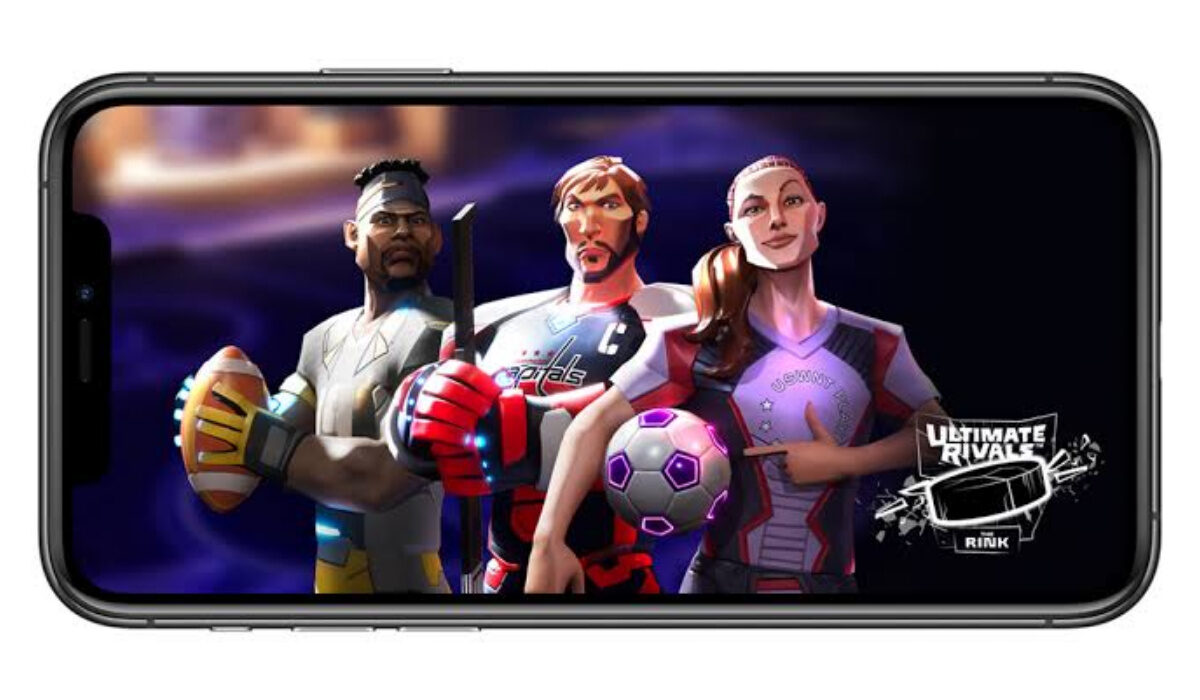
Whatever be the reason for playing games, we have selected some of the best games for iPhone users in 2021. The good news is that there are both online and offline games for iPhone users on the list.
- Best free online iPhone games in 2021
- Best free offline iPhone games in 2021
Best free online iPhone games in 2021
The games that are listed under this category are games that require an Internet connection before users can play. Are you an iPhone user who wants to play the best games online? Take a look at the very best games below.
Among Us
The name of the game gives a clue of what iPhone users should expect. It is a game played amongst friends. In this game, users are assigned tasks to complete as travelers. However, not every task is “good”.
Some of your friends are assigned the role of saboteurs so that the task of others is frustrated. It is left for one or more persons to detect the saboteurs and convince others of his/their claim.
If the saboteurs are identified, they are sent away from the traveling party, if not, they remain and continue to cause mayhem to others.
It is a fun-filled game; one of the best iPhone games in 2021. Interestingly, the game can be played amongst people who are not familiar with themselves too.
Mario Kart Tour
The Mario Kart Tour game is one of the best games for iPhone users in 2021. This game allows you to play against seven other iPhone users in a kart race across different cities.
These cities are named in the real world and users gain points for every race completed. During the races, there are boxes of gifts that if gotten can help improve performance or gain coin gifts.
Those who finish in the top three positions are given Grand Stars and points but a finish below the fourth position results in demotion.
Unlike the other Mario Kart race, the Mario Kart Tour does not place too much emphasis on who finish a race in the first position but on who made the highest points over different races/tours.
If you ever feel tired of playing the game in portrait mode, you can easily switch to landscape mode.
Asphalt 9: Legend
All Asphalt games have always been at the top of most iPhone and Android users. It is no different in 2021. Currently, there are over 142 cars from which users can choose. These cars are shared into different categories; D, C, B, A, and S.
To start, iPhone game lovers kick off with cars from the lowest category; class D. As their performances, they move to the next level until the highest level; level S. For every level reached, the performance of the cars improves.
This game is one of the best games of 2021 and it features amazing graphics and designs.
Best free offline iPhone games in 2021
The games that are listed under this category are games that do not require an Internet connection before users can play.
Brother in Arms 3: Sons of War
One of the best offline games for iPhone users in 2021 is Brother in Arms 3: Sons of War. The game was published by Gameloft in 2014 but has retained its interest amongst game lovers.
It is a shooting, action-adventure game which can be played alone or with others. The game takes after the world war II scenes where users are expected to take down enemies.
With better performances, players can upgrade their weapons. The player is not left alone; the games allow for support from other shooters called “brothers”. These brothers have different capabilities; one might be a sniper while another calls an airstrike.
Do you need the best offline games for an iPhone? Look no further.
Wordscapes
If you love more technical games, Wordscapes should be your go-to game. The game at one point was rated in the top 10 best games on iPhones/IOS. The game was developed by PeopleFun and released in 2017.
It has single-player and multiplayer options. However, the multiplayer option is only available for tournaments. Players of this game are expected to find words, solve puzzles by using the letters provided on the bottom of the screen.
There are over 6,000 levels before players reach the master’s level which has other levels too.
The interesting thing about this puzzle is that new puzzles are available every day. This eliminates the problem of continuous repetition.
Dream League Soccer 2020
Coincidentally, the Dream League Soccer game is actually one of the best soccer games for android devices too. The game can be played partially offline and online.
The Dream League Live mode is played online against other players vying for a trophy but the exhibition matches are offline.
This game allows users to build stadiums that suits their taste and design their team’s kit. Also, users can purchase players as long as they accrue winnings from matches.
The players’ names in this game are the same as in real life. There are several divisions users compete in, from bottom-top. These features make the game very attractive and interesting.
The fact that it has both offline and online modes makes it one of the best games for iPhones in 2021.
Conclusion
The best games for iPhone in 2021 are not necessarily games released in 2021. Most are games published earlier but retained their attractions. They are also available on older iPhone models, not just the latest Apple iPhone 13 series .
Some are the latest series released by various developers. Whether you like sports, action, adventure, races, or the more technical puzzle games, you will find the list above very useful.
Author:Stephen Oyelabi
“We really cannot live a smarter life without our Smartphones…” - Stephen Oyelabi, A Smartphone lover, an avid football fan and the founder of Soofootball.com
