Add MobilityArena as a preferred source on Google
I have owned over 200 phones since 2001 and have a track record of safety. In all these years since I got my first mobile phone, I have only broken the screen of two of them – my Samsung Galaxy S4 and my Infinix Zero 4 Plus (is there a thing with the number 4 here?)
Using phones with a glass back panel comes with peculiar challenges that complicate matters with my sterling record. My record with phone screens remain intact, but it is clear to me now that if I choose to continue to use phones with a glass back panel, I have to start fighting to keep a separate record.
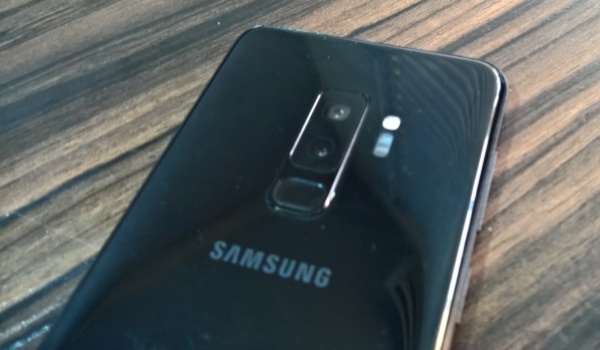
With other kinds of smartphones – those with plastic and metal back panels – all you ever have to worry about is the screen. Keep your screen safe and you are good.
But with phones with glass back panel, you have to worry and care about more than just the screen. There’s another slab of glass that is a huge potential point of failure – the back.
I have used a Xiaomi Mi Note 10 Pro for the last one year. Apart from the fact that it is one of the most capable smartphones I have ever used, it is also a gorgeous device, and the glass back panel is a part of that beauty.
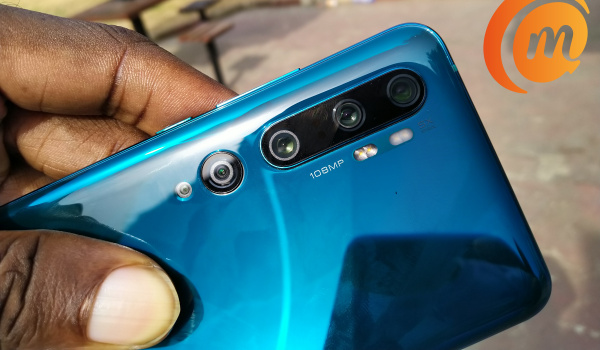
The trouble with phones with glass back panels
Unfortunately, that also means that it is a very fragile smartphone. It is not the first smartphone with a glass back panel that I have owned and used. Not too long ago, I had the Samsung Galaxy S9 Plus , which has a glass back panel as well.
I used a leather protective case with it for the most part, as I had read up a few user accounts of how fragile it was. I also remember the Lenovo Vibe S1 from 2016. It was a slippery eel and a delicate device that had a death wish. I didn’t use a case with it.
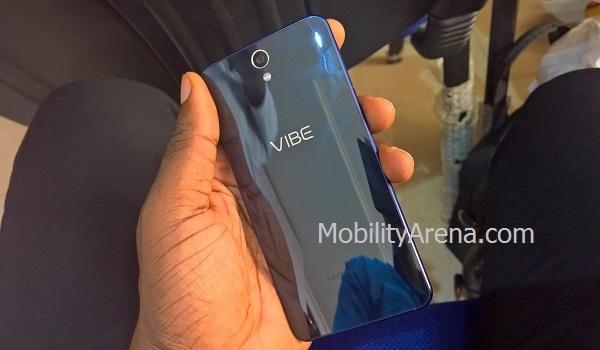
Lenovo Vibe S1 had a glass back panel
Phones with glass back panel are delicate. One drop on a hard surface, or a chance hit, and you can easily end up with a cracked back.
They are also slippery. If you are going to leave them lying on a table, make sure that table is flat or else they might begin a moonwalk for the edge and ultimately have an unscheduled meeting with the floor.
Which was what happened to my Mi Note 10 Pro late last year. When I picked it up, it had just a small nick on one edge. I out it back in its case (I had removed the case during the time the accident occurred) and thought no more of it.
Last week, I took off the case to admire the glorious beauty of my beloved phone once again, and found this:
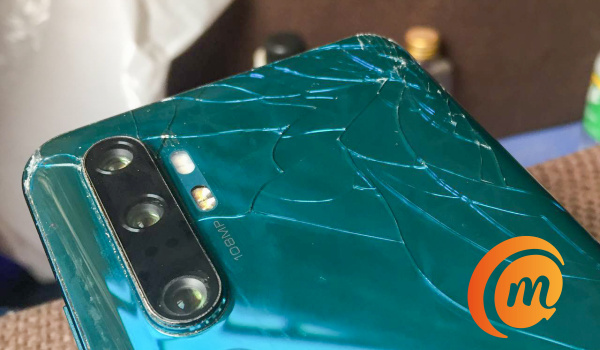
Yes; that nick on the glass at one edge had spread like cancer and the entire upper section of the glass back panel now had a complex web of cracks.
That is the thing with cracked glass. It can start with one small scratch and stretch out into something more complex.
If you have ever had a small crack on your vehicle’s windshield, you know this pattern. Did I mention that something similar happened to my Vibe S1? Have a look:
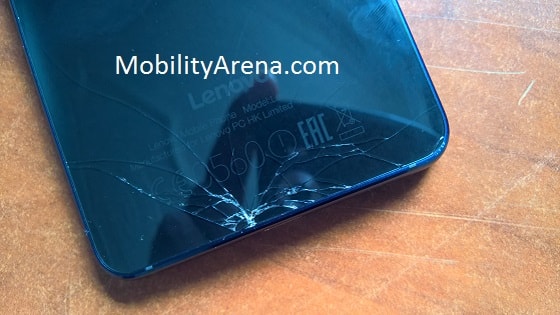
The cracked back glass panel wasn’t as elaborate as what I have on my Xiaomi now, but it wasn’t a pleasant sight either.
My sterling record with phone screens has stayed intact. But my record with glass back panels isn’t looking so good, and I am one of the most careful people with phones.
If you are going to use a smartphone with a glass back panel
I have one piece of advice for you if you choose to buy and use phones with glass back panel: buy and use a protective case for them. Keep the case on all the time.
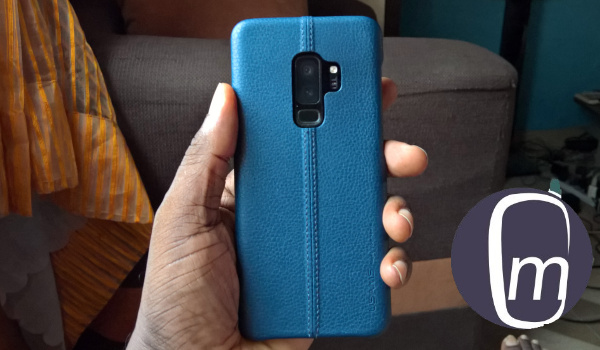
If you take the case off for any reason, put it back as soon as you are done. Back when I had the Samsung Galaxy S9 Plus, I purchased and used a USAMS Joe leather case for it (photo below).
The problem, in my own case, is that I am not a huge fan of putting my smartphone in a case. I love to feel the quality of my devices in my hand. I love to see their beauty. So, while I have been compelled to use cases in recent times, that is not how I prefer to use my phones.
I currently use a case with my Xiaomi but had it off during the time it dropped and cracked. I’d rather just not have a case on my phones. So, I am not going to take my own advice – at least not this one. The advice that I shall stick to going forward is to not buy phones with glass back panel.
I shall stay away from them. There are lots of beautiful smartphones out there with polycarbonate and metal back panels. I shall see to it that I satisfy myself with those.
My Xiaomi Mi Note 10 Pro still works well and is such a capable device that I will have a hard time replacing it. But eventually, it will become dated and no longer be able to keep up with newer devices.
When that time comes to replace it, its replacement will not be a smartphone with a glass back panel. I shall be getting a phone that I can use freely without needing the protective services of a case. This is not my first smartphone with a glass back panel, but it will be my last.
For now, it has a protective case on it. Sadly, I can’t enjoy its beauty any more.
Author:Mister Mobility
Digital Skills and Communication Coach | Mobile Phone Connoisseur since 2001 | Tech Blogging since 2004
Add MobilityArena as a preferred source on Google
Smartphones have grown in leaps and bounds, going from the simpler Java and Symbian devices to more complex Android devices of today. With this advancement in technology came more developed software (with more bugs and glitches).
In this piece, we will take a look at some rather common software issues with Android devices and what to do when your smartphone ever develops such issues.
- Unresponsive screen owing to software issues: While screen issues may also surface from hardware problems or accidents, certain software problems may also mean you’ll see a blank screen when trying to turn on your Android. If you ever encounter this problem, which is one of the more common software issues with Android devices, a simple restart (manually for smartphones with removable batteries) can help you get your device back on track. If this does not work, then a factory reset will help you take care of the bug and get your smartphone up and running again.
Battery draining rather quickly: This issue is one that can be caused by a myriad of bugs, from brightness settings to apps running in the smartphone’s background. However, aside the usual fixes (taking down your device’s screen brightness and turning on power saver mode), you can also consider using Wi-Fi to connect to the internet rather than mobile data. This is because cellular networks are always operational even when signal strength is low, unlike Wi-Fi (which automatically goes to sleep when signal strength is poor, conserving the device’s battery).
Slow or freezing interface: One of the rather common software issues with Android devices, this problem could be due to a number of glitches ranging from memory issues to an outdated software version. Your device interface may also be slowing down if you’ve got a corrupt microSD card. If you encounter this problem with your device, try getting rid of unnecessary apps or media files (you can transfer to an online storage or a microSD card that’s not corrupted). You could also clear app cache and reduce the use of live wallpapers (if you use one).

- Apps not downloading on Android through download manager: This issue may be due to a corrupt cache on your device. You can solve this issue effectively by clearing Google Play Store’s cache and search history. To clear its cache, follow these tips Google Play Store > Storage > Clear Cache . You also clear Play Store’s local search history by going through this channel, in the Play Store app go to Menu > Settings > Clear local search history .
While these tips above can help you when your smartphone develops any of the common issues with Android devices, you can also try preventing some of these issues with these tips below:
- Avoid rooting your Android device (unless you are a geek and know your way really well around it).
- Restart your smartphone every once in a while, it does not have to develop a bug or start freezing before you do this.
- Once you get a new device, go to settings > about , document everything you see there somewhere safe, as it may come in handy sometime in the future.
- Always keep an eye on your available storage to ensure it does not get filled up without you noticing.
- Avoid using chargers or accessories that are not recommended with your device’s model.
Author:Alfa Baye
Staff Writer
