Add MobilityArena as a preferred source on Google
If you replace your phone every year because you believe you are buying a better device, I have an island on Mars to sell you.
Apple iPhones get a minimum of 5 years of software updates. Google’s newer Pixel devices get up to 7 years, and the same goes The more recent crop of Samsung phones get up to 7 years. Nothing smartphones get 3 years of Android updates.
And Samsung has recently announced the Galaxy A16 5G and the Galaxy A06 with promises of 6 and 2 years of software updates respectively.
So, why exactly are people replacing their smartphone every year?
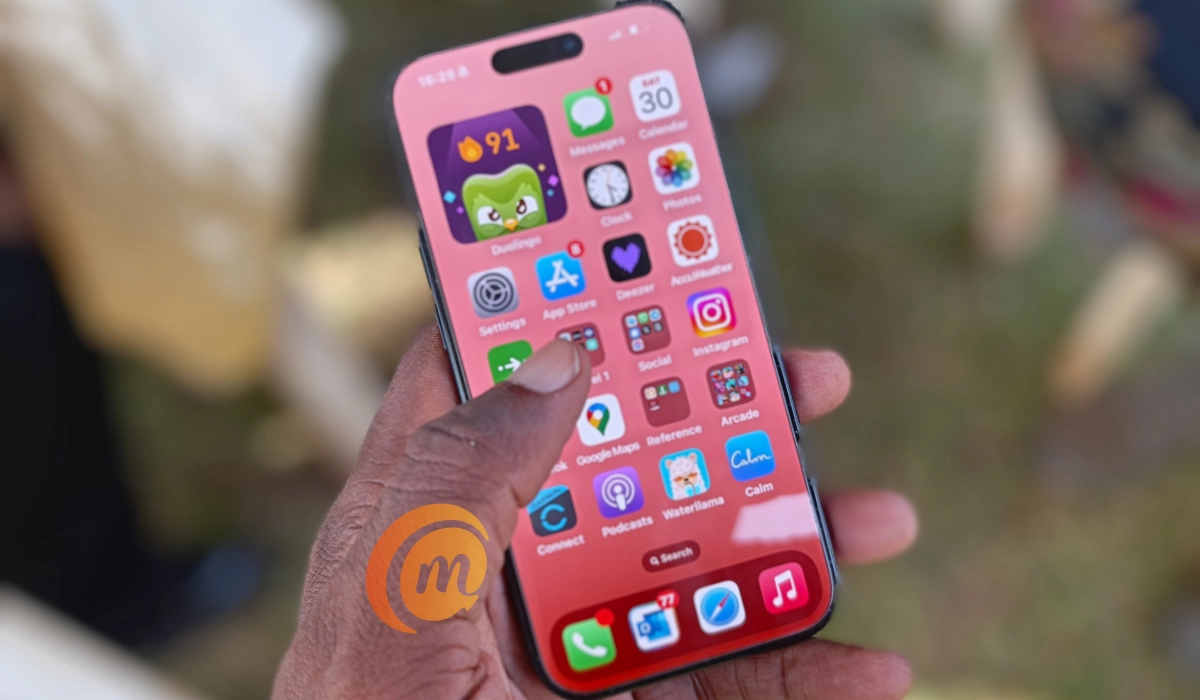
Why do you replace your phone every year? Image source: Mister Mobility
It doesn’t make sense to me. The whole idea of software support is that mobile users should be comfortable using their devices years after their release dates. But it appears that people really do prefer to replace their smartphones every year. At least, a highly vocal, visible demography of users, at the least. What is really interesting is that it is this very vocal demography that advocates and agitates the most for years of software support.
The paradox is interesting to see. People advocate for a benefit, then totally make buying decisions that ignore that very benefit. That is really wild.
Someone will say newer hardware is why they do it. That isn’t a satisfactory answer to me. Why? Have you compared the differences in hardware with each yearly release? Have you compared the hardware of iPhone 15 to that of iPhone 14, and that of Samsung Galaxy S24 to Samsung Galaxy S23? If you haven’t, you should.
I have, and I can tell you, straight up, that the differences are marginal. Nothing groundbreaking. Nothing that moves the needle significantly. The phone brands print a number of buzz words to market the newer releases, but if you look at the specs and features, you are spending $1,000 or $500 or $250 every year in essentially the same phone. At least this is true for most phones released two years apart. Most of the time, it isn’t until the 3rd year that the hardware difference makes any sense.
You could put an iPhone 12 and an iPhone 15 in a photoshoot, and you would be disappointed to find out that you have to pixel peep and squint to notice any difference in the photo results. The same is true for performance, battery life, and other features. Do you really replace your phone because of a 10% improvement in performance – a performance difference that makes zero difference in your every day usage of the device?
If you are one of the few honest individuals around, you might admit that you replace your phone every year to keep up with the Joneses. Only a very few individuals will be that honest. And if that is what you want to do, that’s fine. I imagine that there is some validity in that. But if you replace your phone every year because you believe you are buying a better device, I have an island on Mars to sell you.
Your premium flagship smartphone will remain powerful and up-to-date for years after it was released. For example, my Lumia 950 was a better camera phone than the flagships from Samsung, Apple, and other brands for two years after its release in 2015 . What would be the point of replacing it in that period?
Your Apple iPhone 13 and iPhone 14 run the exact same apps and services that the iPhone 15 does. Why replace the former with the latter? Skip the 15. Maybe skip the 16. And should you skip the iPhone 17, I assure you that you wouldn’t be missing much either. As a matter of fact, if you are like most smartphone users, you do not use most of the processing power and features of your device . So, why replace your phone every 12 months?
As a gadget reviewer, I enjoy the privilege of having multiple devices pass through my hands every year, and so I get to indulge myself and switch phones often – sometimes multiple times each year. But I am clear in my head about it: if my job did not require it and make it easy, I wouldn’t catch me, dead or alive, replacing my smartphone every year. I’d use each one for the lifetime of available software support and only when support ends, or the phone dies, would I replace it.
Yes, I would replace my phone every three (3) to seven (7) years, depending on the software support policy of the brand in question. My last car was purchased brand new and it saw 11 years of usage before I sold it. My shoes last for years of usage. The same goes for TV, fridge, and pretty much everything else. Why would I want to switch my phone every single year?
Ask yourself the same. Perhaps you replace your phone every year only because marketing buzz words are messing with your head. They are likely messing with your finances, too.
Author:Mister Mobility
Digital Skills and Communication Coach | Mobile Phone Connoisseur since 2001 | Tech Blogging since 2004
Add MobilityArena as a preferred source on Google
Google Search has needed to be disrupted, for years. ChatGPT Search is a new AI search engine that has demonstrated the capability to do that. This article was originally written in July 2024 when ChatGPT Search was first announced in beta state. It has now been modified to provide up-to-date information about OpenAI’s new search engine .
October 2024 update : On the 31st of October 2024, ChatGPT Search went live and began to be available to users of the mobile app, as well as via the chatgpt.com website and the ChatGPT desktop app.

ChatGPT Search is OpenAI’s long-awaited answer to Google Search. It is an AI search engine powered by the GPT-4 model family with real-time summarized information from the web with links to relevant sources, so users can click through to go read up in details.
The juicy part of this new AI search engine, it is that it gives you answers with relevant sources. This means, it includes links back to the websites that it pulls its answers from. This is similar to how Microsoft’s Copilot AI chat works. As a Web publisher, I love this approach that values, respects, and protects my hard work. I imagine that many other publishers will appreciate it too.
What stands out in the press release from OpenAI is that it says thy want to enhance the conversational capabilities of their AI chats with real-time information from the Web. This is significant. If you have used ChatGPT and some other AI chatbots , you will be all too familiar with how the information presented in response to your questions and prompts is often out of date – years old. By incorporating the ability to respond with real-time information, along with recognition of context and nuances, what we have is a powerful modern search engine that anyone will enjoy using.
It isn’t news that Google Search has been a monopoly for a long time. No other search engine has come close to it in terms of reach and scale, and that needs to change. I do not want Google Search to die. Replacing one monopoly with another is counterproductive. But like many other people, I want there to be an alternative that matches it in terms of power and scale. Having everyone dependent on the whims and caprices of only one player in a field is always a bad idea. History has proven that again and again.
In recent times, online journalism and Web publishing has taken a hit from Google Search’s unpredictability. Overnight, thousands of Web publishers had valuable traffic that they built up from years of work wiped out. I have seen the devastation that some of them have had to deal with. It has been a bloodbath. That has to change, and it can’t as long as Google remains a monopoly in the world of Web search.
If there is any technology that provides the needed leverage for Google to have serious competition, it is artificial intelligence (AI), and if there is one AI company that has a good chance of pulling it off, it is OpenAI, the developers of ChatGPT Search. Yahoo once was the top search engine. It got disrupted. Nobody stays on top forever. Even almighty Google can and will be disrupted, and I can’t wait for the day it will happen, because right now, the search giant is messing too many things up.
OpenAI says that ChatGPT Search will quickly and directly respond to your questions with up-to-date information from the web while giving you clear links to relevant sources. Fabulous. Music to my ears. In addition, you will be able to ask follow-up questions, like you would in a conversation with a person, with the shared context building with each query. Exactly as search should be – a natural interaction between the user and the search engine.
ChatGPT Search is currently in beta state now out of beta and open to the public , and OpenAI is currently testing it with a small group of users and publishers to get feedback to improve the service. The objective is to eventually integrate this new search engine into ChatGPT .
It is clear that OpenAI is looking to improve how ChatGPT Search works to benefit everyone – those searching for answers and the publishers that work hard to provide those answers. I look forward to seeing ChatGPT Search get it right and succeed.
With ChatGPT Search now officially live, it is time for me to make that switch and stop using Google Search for good. Adios!
Author:Mister Mobility
Digital Skills and Communication Coach | Mobile Phone Connoisseur since 2001 | Tech Blogging since 2004
