Add MobilityArena as a preferred source on Google
You have boarded a flight and just before take-off, there is the mandatory announcement that includes an instruction that you switch off your laptops, cell phones, smartphones, tablets, et al, before the aircraft takes off. Why are we asked to turn off electronic devices on planes?
In simple terms, modern aircraft have tons of electronic instruments, called avionics, that could possibly be interfered with by electromagnetic waves from electronic devices like your smartphone. As such, flight regulatory authorities made that rule.
You could ask if there is any conclusive evidence that mobile phone radio waves are known to cause this sort of interference. There is none. What we have are circumstantial evidence – for example, there are random reports by pilots that the aircraft compass is more accurate when the instruction to turn off electronic devices on planes is enforced.
There are also no clear cases of air crashes from electronic interference. The question is, Does anyone want to find out the hard way? Do you want to be that person on that airplane? To err on the side of caution, aviation authorities have kept the rule in place.
What of Flight Mode or Airplane Mode?
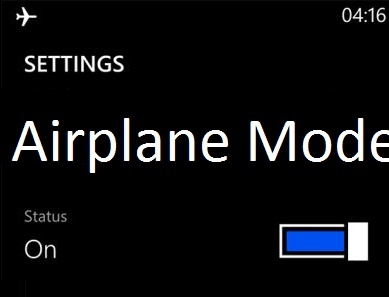
Flight Mode or Airplane Mode was designed with use of mobile devices on airplanes in mind.
When you activate Flight Mode on cell phones and other mobile devices, what happens is that the wireless radio components of those devices are turned off. Those are the components that generate elctromagnetic waves that are potentially dangerous to aircraft avionics.
So, certain aviation bodies have adjusted the rule to say that passengers can be allowed to keep their smartphones on, but in Flight Mode, when on board a plane.
Essentially, where this rule applies, you can use your devices for listening to music, watching vidoes, but with zero access to Wifi or a mobile network or even Bluetooth.
Not all aviation bodies have authorised the use of Flight Mode on board airplanes though, so for the most part, the instruction to turn off electronic devices on planes still stand in most places.
What happens if you don’t put your phone on airplane mode or switch it off?
Besides the possible risks of interference to the aircraft’s navigation system, if you leave your iPhone or Android phone switched on abord an aircraft, you will drain its battery really fast. Why?
In flight, signals from mobile network towers cannot reach you, so your cell phone will keep searching and searching. That constant searching is a battery drain.
What happens is that by the time you get to your destination, your battery is flat or ridiculously low. Yes; Sherlock, you are out of battery at the very time you probably need it the most.
Note that whenever cell phones and iPhones are searching for network signals, their radio components work extra hard (which is why there is faster battery drain). It is similar to when you are out of coverage area on ground. Your phone just keeps searching to connect you.
And the procesor does extra work, burns extra power, to do that. This extra burst of power and of electromagnetic activity is responsible for the increase in possibility of radio interference with an airplane’s navigation system.
What to do when on a plane
The instruction to turn off electronic devices on planes is for the public safety. At the very least, put your smartphone in Flight Mode when on a plane. This reduces the risks of interference and makes sure you don’t drain your battery before you get to your destination.
Author:Mister Mobility
Digital Skills and Communication Coach | Mobile Phone Connoisseur since 2001 | Tech Blogging since 2004
Add MobilityArena as a preferred source on Google
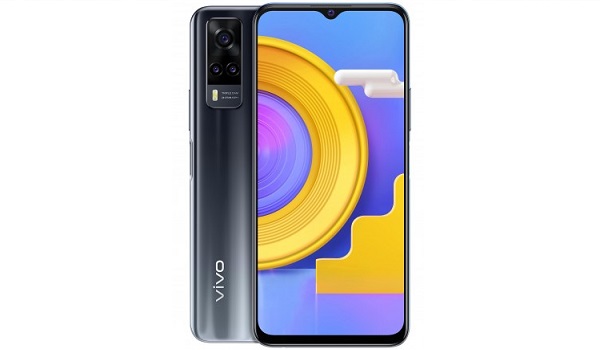
| Quick Specs Of Vivo Y31 (2021) |
|---|
| OS: Android 11. Release date: January 2021. Network Type: 2G/3G/4G Display: 6.58-inch, 2408×1080 pixels resolution Processor: Snapdragon 662 Selfie Camera: 16 MP Main camera: 48 MP triple RAM: 6 GB ROM: 128 GB Battery: 5000 mAh. Phone Status: Official. |
Vivo Y31 (2021) Full Specs, Features, Photos
Mobile Wireless Network and Software
- 2G mobile network bands : GSM, GPRS, EDGE 850 / 900 / 1800 / 1900 MHz.
- 3G mobile network bands : UMTS, WCDMA, HSDPA 850 / 900 / 2100 MHz
- 4G mobile network bands : 1 / 3 / 5 / 8 / 38 / 40 / 41.
- 5G mobile network bands : No.
- SIM Type : Nano-SIM, Dual SIM
- Software / OS : Funtouch OS 11, based on Android 11
Design, Form Factor, Appearance
- Dimensions : 163.9 x 75.3 x 8.4 mm
- Weight : 188g
- Display : 6.58 inches, 2408×1080 pixels, 20:9 aspect ratio, IPS LCD screen
- Colours : Racing Black. Ocean Blue.
- Physical Build : Plastic

Internal Hardware Specs
- Processor Type : 64-bit, 2.0 GHz Octa-core, Kryo 260
- Processor Name : Qualcomm Snapdragon 662 (11nm)
- Graphics Processor : Adreno 610
- RAM : 6 GB
- Internal Storage : 128 GB
- External Storage : microSD, up to 1 TB (dedicated slot)
Photography, Video Recording
- Main Camera : 48MP primary sensor + 2MP depth sensor + 2MP macro lens, auto-focus, dual LED flash, 1080p@30fps video recording
- Front Camera : 16 MP, Face ID/Recognition, 1080p@30fps video capture
Audio, Video Playback
- Music Support : PCM, AAC / AAC + / eAAC + / MP3 / AMR – NB / WB / APE
- Audio : 3.5 mm audio jack
- Loudspeaker : Mono speaker
- Video Support : H.264/MP4/MPEG4 player
- FM Radio : .
Phone Sensors
- Digital Compass : No.
- Accelerometer : Yes.
- Proximity Sensor : Yes.
- Ambient Light Sensor : Yes.
- Barometer : No.
- Pedometer : No.
- Heart Rate Monitor : No.
- Gyroscope (G-Sensor) : Yes.
- Fingerprint Scanner : Yes; side-mounted.
- Face Unlock : Yes.
- Iris Scanner : No.
- Motion Sensing / Gesture Control : No.
- Voice Control : No.
- Intelligent Digital Assistant : Yes; Google Assistant.
- Infra-red Sensor : No.
Connectivity Options
- Bluetooth : v5.0, A2DP
- WiFi : Wi-Fi 802.11 a/b/g/n/ac, hotspot
- GPS : Yes; A-GPS, GLONASS, GALILEO, BDS
- USB : microUSB v2.0. Type-C 2.0. USB-OTG.
- NFC : No.
Miscellaneous Specs and Features
- Battery Type and Capacity : Non-Removable Lithium-Polymer 5000 mAh
- Battery Charging : 18W fast charging (0-70% in 67 minutes)
- Wireless Charging : No.
- Reverse Charging : Yes.
- Model Version/Number :
Vivo Y31 Price and Launch Date
- Announced : January 2021
- Release Date : January 2021
- Price in India : INR16,490 ($225/€185).
MobilityArena Buyer’s Guide Verdict
Not available.
Our Buyer’s Guide Verdict is recommendation that we make based on our evaluation the specs of the device. It is a general guide designed to help you understand how much value a smartphone offers for its price. It is not a stamp of quality assessment or an endorsement of the device or of the manufacturers. Be sure to ask questions and use your judgement when buying any device, as MobilityArena may not be held responsible for your buying decisions .
Vivo Y31 Phone Review Rating
Not available.
