Add MobilityArena as a preferred source on Google
Wireless charging and wireless chargers are relatively new technology in the mobile space. It allows you to charge your smartphone without having to plug a cable to it. However, a cable is involved in a different way. We explain how it works below, as well as the advantages and disadvantages of using one.
Wireless charging involves the use of a charging pad, plate, pillow, or pod, which itself is connected to a power source by a cable. It is the last mile of the charging process that is wireless – you place your compatible phone on the pad and it gets charged via electromagnetic waves.
Not all smartphones have wireless charging capabilities, which is why only compatible phones will work with a wireless charger. So, the first step is to make sure that your smartphone supports wireless charging. For more details, see our earlier article, How Wireless Charging Works .
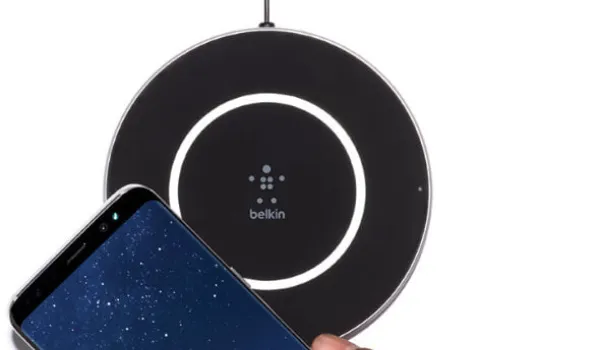
Belkin F7U014 wireless charger pad with Samsung phone
- The advantages of using a Wireless Charger
- The disadvantages of using a Wireless Charger
- Is wireless charger bad for battery?
- Can all phones use a wireless charger?
- Why does wireless charging take so long? Why is it so slow?
- How do I know if my phone has wireless charging?
- The future is wireless References
The advantages of using a Wireless Charger
Convenience : The key advantage of charging your phone wirelessly is the convenience of not plugging in a cable. Just drop it on the plate and go about your work (or play). If it rings, you pick it up, and when done, drop it. You have no need to worry about getting entangled with a cable.
Power Surge Protection : A second advantage is more applicable to people who live and work in areas prone to power surges. The absence of a direct cable connection provides some protection for the smartphone in the event of a power surge. This is because “the wireless charger cannot pass increased voltages on to your smartphone” [1]. At worst, the charging pad gets damaged, but your smartphone stays unharmed. This makes using a wireless charger safer for your smartphone than charging directly from a power outlet.
Fast Charging : Wireless charging pads charge as fast as cables do. It depends on the rating of the charger you buy. An 18W wireless charger is as fast as an 18W cable charger. So, when shopping for a wireless charging pad, be sure to check for its rating. That way you don’t end up with one that is of lower rating than your phone supports.
Wear-and-tear Protection : Wireless charging prevents wear and tear on the charging port of your smartphone. Charging port damages are some of the most common faults in mobile phones. The less you have to plug in and pull out a USB port, the longer the life of your smartphone.
The main advantages of wireless chargers are convenience and protection from the west and tear of inserting removing a physical charging port.
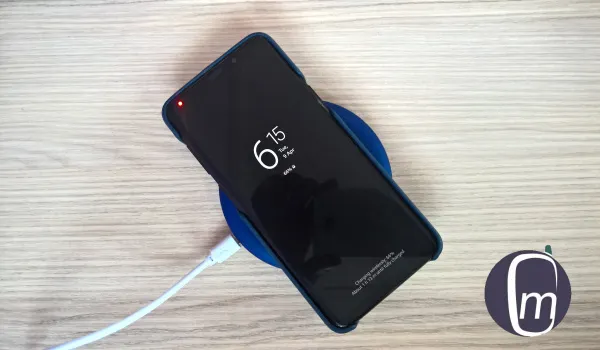
Samsung Galaxy S9 Plus on a wireless charging plate
The disadvantages of using a Wireless Charger
Higher Cost : Wireless charging pads are more expensive than regular chargers of the same ratings, so you will spend more to enjoy the convenience and benefits of wireless charging.
No Multitasking : When using a wireless charger, you cannot use your phone at the same time, because you have to lift the phone off the pad to use it. Once you lift it, charging stops. This is unlike how you can plug your phone to a normal charger and still use it at the same time.
Using a wireless charger is slow : Wireless charging is so much slower than wired charging. The technology hasn’t kept up with fast wired charging speeds. You will find fast wireless chargers to buy, but they do not match the charging speeds available from using a cord.
Is wireless charger bad for battery?
Wireless charging produces more heat than wired charging, so your smartphone battery will warm up more when you use a wireless charger. However, this is not a problem, as safeguards have been built to keep things stable. As such, charging your device wirelessly is not bad for the battery.
Can all phones use a wireless charger?
Not at all. A phone has to have wireless charging functionality built into it for it to be capable of charging wirelessly. In some cases, a 3rd party wireless charging case or a wireless adapter/receiver can be purchased and used to add the functionality.
Why does wireless charging take so long? Why is it so slow?
Because wireless charging generates more heat than wired charging, it is necessary to keep the charge at a lower and slower pace to avoid damage to the battery of the phone.
How do I know if my phone has wireless charging?
The easiest way to know if your smartphone has wireless charging is to check the product user manual, documentation, or specifications.
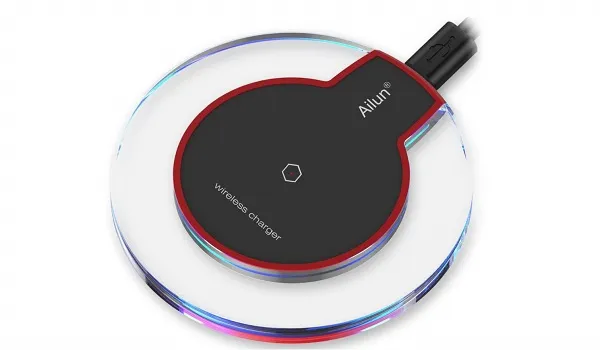
Ailun wireless charger
The future is wireless
In all, wireless charging offers more advantages than disadvantages. But as with all things, the benefits that it offers may not be high up on your list of needs.
To get a wireless charger or not? Well, the first factor is whether or not your smartphone supports the technology. Then you decide whether getting one is worth the money and the effort or not. As with some things though, you never know how much you might like it until you take the plunge.
Wireless charging technology is here to stay though. And we will see wireless chargers evolve in the years to come. Welcome to the future.
References
[1]. Qi Certified Charging and Belkin Wireless Charging Safety .
Author:Mister Mobility
Digital Skills and Communication Coach | Mobile Phone Connoisseur since 2001 | Tech Blogging since 2004
Add MobilityArena as a preferred source on Google
Mister Mobility reviews the Xiaomi Mi Compact Bluetooth Speaker 2, a pocketable cylindrical gadget that features a classy parametric speaker mesh cover, Bluetooth 4.2 with A2DP/AVRCP/SPP profiles, a built-in microphone, and a 480 mAh battery .
I was at the Xiaomi Nigeria product launch yesterday afternoon at Eko Hotel and Suites. The only Xiaomi phones launched were Redmi Note 7 and Redmi 7. Both have 3 variants each, so effectively 6 devices, if we want to stretch things a little. If interested in the prices of these smartphones and their variants, check out the Redmi Note 7 specs and Redmi 7 specs pages.
I did return home with a goodie bag that contained the Mi Compact Bluetooth Speaker 2 launched in India a few months ago – November 2018 specifically.
Also known by the product name, MDZ-28-DI, this is an interesting piece of art. It has that distinctive Mi look and the parametric speaker mesh touch is as tasteful as it gets. This is a pure Bluetooth affiar. There is no 3.5mm audio jack support or a slot for a memory card.
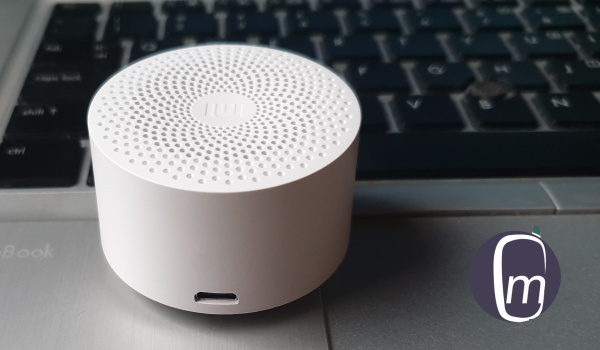
Xiaomi Mi Compact Bluetooth Speaker 2 Quick Specs
- Dimensions: 5 x 5 x 3.2 cm,
- Weight: 54g,
- LED notification light,
- Bluetooth 4.2, A2DP/AVRCP/SPP profiles,
- 4 Ohm impedance,
- Effective distance is up to 10m,
- Built-in microphone,
- 480 mAh battery.
In-the-box
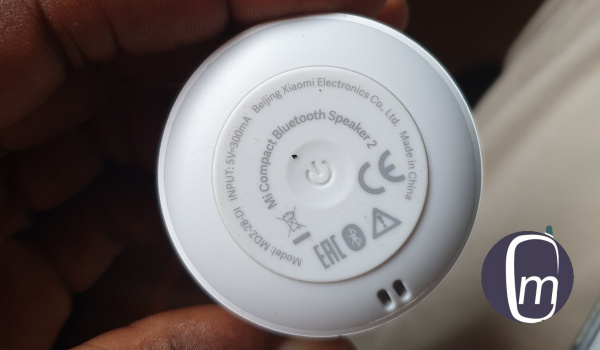
The box of the Mi Compact 2 includes the speaker itself, a Larnyard Hand Strap, and a quick guide. There is no USB cable and no charging plug included.
Xiaomi Mi Compact Bluetooth Speaker 2 performance
Having seen the specs and accessories, the next question is, What is the real-life handling and performance of the Mi MDZ-28-DI like? The power button is at the bottom side of the device, and that is the only button you will find on it.
Pairing it with the Galaxy S9 Plus was easy, standard Bluetooth fare: I turned on the speaker, scanned for it on the phone and paired. I played one of my favourite music tracks on it to see what it sounds like on the Mi Compact 2.
Mind-blowing. I ran a few music playback tests betweeen it and the bigger Havit Bluetooth speaker , and the Mi Compact Bluetooth Speaker 2 beat the latter effortlessly. Everyone present was wowed at how this smaller speaker could produce better quality audio and louder volume.
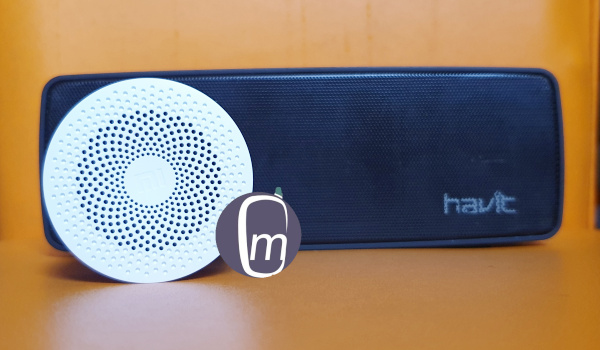
The Mi Compact Bluetooth Speaker 2 next to the Havit HV-SK570BT Bluetooth Speaker
Every time I put on the speaker, it automatically connects to my phone, which is as it should. There is a microphone built in, so the speaker can be used to handle calls. And in China, this supports Xiao AI (a virtual assistant), so you can interact with it by voice.
The single button used to power on/off the speaker also can be used to accept and end phone calls when you use it for voice calls. While paired, you can press the button to resume the last track you were playing, and press it again to pause it. Press and hold the button to power off/on.
The Mi Compact Bluetooth Speaker 2 supports battery level indicator, so that if you check your Bluetooth menu in your phone, you can view the battery level of the speaker. It is also a much less complicated Bluetooth speaker to use. Audio quality and volume are not its only strengths. Simplicity and ease of use are others, not to mention the stunning design.
Xiaomi Mi Compact Bluetooth Speaker 2 Price
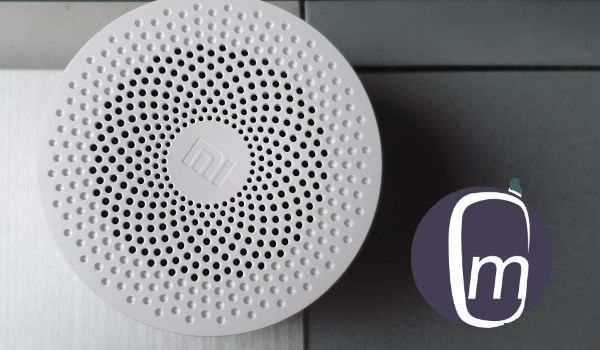
With such good design and performance, one would expect it to cost an arm and a leg. The official price is Rs. 799 (in India where it has been launched). This is about $11 or NGN4,000.
We are expecting a review unit of the Redmi Note 7 to arrive any moment from now, so stick around for the full MobilityArena treats.
- Don’t miss our reviews .
- Join our WhatsApp Group , to be notified of the most important articles and deals,
- Follow us on Instagram , Facebook , Twitter , and YouTube .
Author:Mister Mobility
Digital Skills and Communication Coach | Mobile Phone Connoisseur since 2001 | Tech Blogging since 2004
